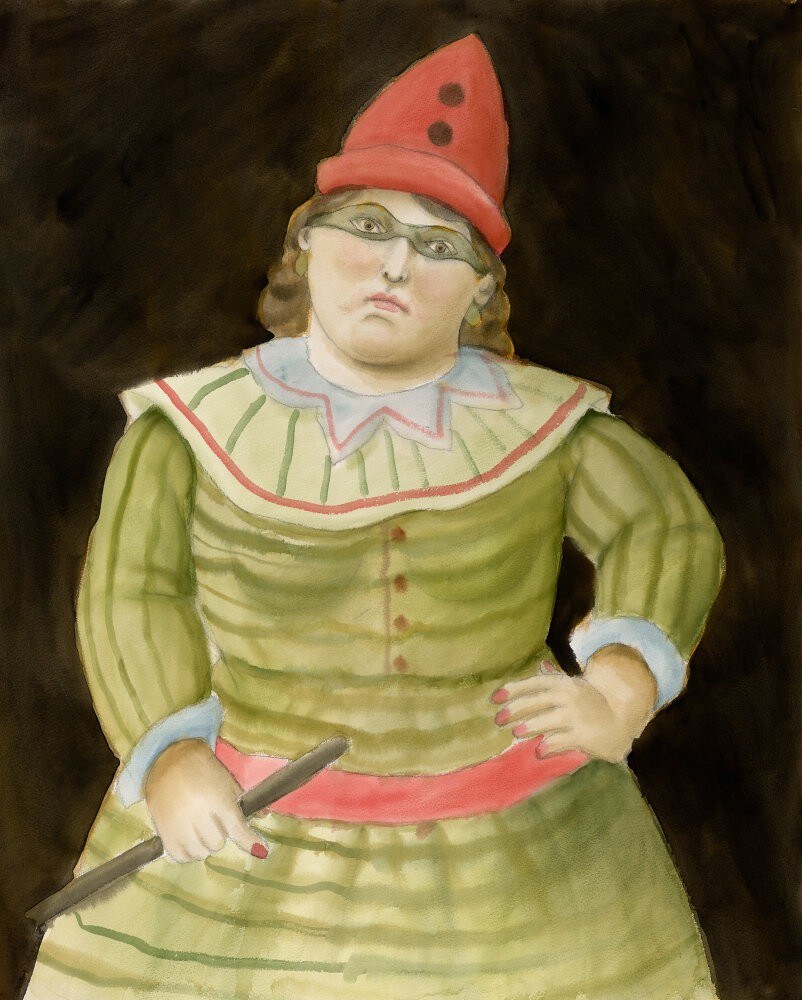
La figura occupa il centro della composizione con una frontalità volutamente solenne, quasi fosse presentata al pubblico nel momento di una pausa anziché durante l'esibizione. Il corpo, disposto secondo un saldo asse verticale, mantiene una postura raccolta e stabile; il braccio destro si piega con naturalezza fino a poggiare la mano sul fianco, mentre quello sinistro trattiene una sottile bacchetta che attraversa diagonalmente la parte inferiore dell'immagine, introducendo l'unico elemento obliquo di un impianto costruito quasi interamente su linee verticali e orizzontali. Il volto, appena inclinato, conserva un'espressione assorta e priva di enfasi teatrale; il piccolo cappello conico, il grande colletto pieghettato e il costume a righe verdi e ocra definiscono l'identità circense della figura senza alterarne la composta monumentalità. Alle sue spalle una campitura scura, uniforme e priva di qualsiasi articolazione ambientale isola la protagonista entro uno spazio astratto, nel quale la presenza della figura coincide integralmente con la forza della costruzione pittorica.
La scelta di rappresentare l'artista del circo in una condizione di assoluta immobilità costituisce uno degli aspetti più originali dell'opera. Botero rinuncia deliberatamente alla descrizione dell'esercizio acrobatico, del movimento o dello spettacolo per concentrare l'attenzione sul momento della presenza; la figura non viene colta nell'azione, ma nell'intervallo che la precede o la segue, quando il costume continua a evocare il mondo del circo ma il corpo recupera una dimensione di composta quotidianità. Da questa sospensione deriva una tensione figurativa di particolare intensità, poiché l'energia normalmente associata all'esibizione permane nell'immagine come possibilità trattenuta, affidata alla sola disciplina della costruzione formale.
L'organizzazione della superficie è governata dal dialogo fra il rigoroso andamento verticale della figura e il ritmo decorativo del costume. Le bande che percorrono il busto e la veste seguono l'espansione dei volumi senza interromperne la continuità, rendendo pienamente leggibile la struttura del corpo attraverso la semplice modulazione del motivo ornamentale. Anche il grande colletto circolare partecipa a questa costruzione, costituendo un'ampia fascia luminosa che raccorda il volto al torso e stabilisce un equilibrio fra la compattezza della parte superiore e la più ampia dilatazione della veste. Nulla, nella decorazione dell'abito, appare affidato a una funzione puramente descrittiva; ogni elemento contribuisce invece alla definizione del ritmo interno della composizione e accompagna la progressiva articolazione delle superfici.
Particolare rilievo assume il rapporto fra la figura e il fondo. La vasta campitura scura elimina qualsiasi riferimento allo spazio dello spettacolo, al tendone o alla scena, sottraendo il personaggio alla dimensione narrativa del circo e ricollocandolo entro una condizione di assoluta autonomia figurativa. Il contrasto fra la profondità del fondo e la luminosità dell'incarnato e del costume accentua la percezione plastica della figura, senza ricorrere a effetti chiaroscurali accentuati; il volume emerge infatti attraverso la progressiva modulazione del colore e la continuità del modellato, secondo un procedimento che appartiene ai caratteri più riconoscibili della produzione ad acquerello dell'artista.
La tecnica rivela una padronanza pienamente matura del mezzo. Il ductus del disegno mantiene un'autorità strutturale costante, definendo con precisione il profilo della figura e regolando la distribuzione delle principali masse compositive; le velature cromatiche si sovrappongono con estrema trasparenza, lasciando che la luminosità della carta partecipi alla definizione delle superfici e attenuando ogni effetto di pesantezza materica. Il colore costruisce la forma con progressione continua, evitando qualsiasi virtuosismo tecnico e affidando la qualità dell'immagine alla perfetta integrazione fra linea, modulazione tonale e ritmo compositivo.
La serie dedicata al circo occupa un posto centrale nella ricerca di Fernando Botero non tanto per il carattere spettacolare dei soggetti, quanto per le possibilità figurative offerte da un universo nel quale costume, gesto e presenza scenica costituiscono elementi di eccezionale ricchezza formale. In quest'opera, tuttavia, l'artista sceglie di sospendere ogni dimensione teatrale per restituire alla figura una gravità inattesa, quasi monumentale. La donna del circo cessa così di essere un personaggio dello spettacolo e diviene una presenza autonoma, costruita attraverso l'equilibrio delle proporzioni, la continuità del modellato e la rigorosa disciplina della composizione; il soggetto si trasforma in un'occasione per riflettere sulla stabilità della forma e sulla capacità della pittura di conferire permanenza anche alle immagini più strettamente legate all'effimero della rappresentazione scenica.
The figure occupies the centre of the composition with a deliberately solemn frontality, as though presented to the spectator during a moment of repose rather than in the midst of performance. The body is organised around a firmly established vertical axis and retains a composed, self-contained posture; the right arm bends naturally until the hand rests upon the hip, while the left supports a slender baton that traverses the lower portion of the composition diagonally, introducing the sole oblique element within an arrangement constructed almost entirely upon vertical and horizontal relationships. The face, inclined only slightly, preserves an expression of quiet introspection devoid of theatrical emphasis; the small conical hat, the ample pleated ruff, and the striped costume in shades of green and ochre define the performer's circus identity without diminishing the composed monumentality of her presence. Behind the figure, a uniform dark field, entirely devoid of environmental articulation, isolates the protagonist within an abstract space in which her presence coincides wholly with the authority of the pictorial construction.
The decision to represent the circus performer in a condition of complete stillness constitutes one of the most original aspects of the work. Botero deliberately relinquishes every description of acrobatic display, movement, or spectacle in order to concentrate upon the condition of presence itself; the figure is not depicted in the act of performance, but in the interval that either precedes or follows it, when the costume continues to evoke the world of the circus while the body regains the composure of ordinary existence. From this suspension arises a figurative tension of remarkable intensity, for the energy ordinarily associated with performance remains latent within the image as a restrained potential, entrusted entirely to the discipline of formal construction. The theatrical dimension is thus not denied but transformed into an interior quality of the composition, where silence acquires the same structural importance that movement would otherwise assume.
The organisation of the pictorial surface is governed by the dialogue between the rigorous verticality of the figure and the rhythmic articulation of the costume. The stripes that traverse the bodice and the skirt follow the expansion of the volumes without interrupting their continuity, rendering the structure of the body fully legible through the measured modulation of the decorative motif alone. The broad circular ruff likewise participates in this constructive logic, establishing a luminous transition between the face and the torso while balancing the compact concentration of the upper body with the broader expansion of the garment below. Nothing within the decorative vocabulary of the costume functions merely as ornament; every element contributes directly to the internal rhythm of the composition and accompanies the gradual articulation of its surfaces.
Particular significance is attached to the relationship established between the figure and the background. The extensive dark field eliminates every reference to the circus ring, the tent, or the theatrical stage, removing the performer from the narrative circumstances of spectacle and relocating her within a condition of complete figurative autonomy. The contrast between the depth of the background and the luminosity of the flesh and costume intensifies the plastic presence of the figure without resorting to emphatic chiaroscuro; volume emerges instead through the progressive modulation of colour and the continuity of modelling, according to a procedure that belongs among the most distinctive characteristics of Botero's work in watercolour.
The technical execution reveals a thoroughly mature command of the medium. The linear ductus retains unwavering structural authority, defining the contours of the figure with exceptional precision while regulating the distribution of the principal compositional masses; transparent washes are superimposed with extraordinary restraint, allowing the luminosity of the paper to participate directly in the articulation of the surfaces and mitigating every suggestion of material density. Colour constructs form through a continuous sequence of tonal relationships, avoiding all technical display and entrusting the expressive force of the image to the perfect integration of line, chromatic modulation, and compositional rhythm.
The circus cycle occupies a central place within Fernando Botero's artistic production, not because of the spectacular character of its subjects, but because it offered the artist an extraordinarily fertile field for investigating the relationship between costume, gesture, and the enduring presence of the human figure. In this work, however, Botero deliberately suspends every overtly theatrical element in order to restore to the performer an unexpected gravity, almost monumental in character. The circus woman ceases to function as a performer and becomes instead an autonomous pictorial presence, constructed through the equilibrium of proportion, the continuity of modelling, and the rigorous discipline of composition. The subject is thus transformed into an occasion for reflecting upon the permanence of form and upon painting's capacity to confer lasting dignity upon images whose very nature would otherwise appear inseparable from the transience of theatrical performance.